In Nuwara Eliya's crisp highland air, every sip of tea tells a story of a proud colonial legacy transformed into a national identity. Join us for a private tour of some of the island's most prestigious estates.
At 1,868 metres above sea level, the air in Nuwara Eliya has a quality that is entirely its own: cool, slightly sharp, scented with eucalyptus and something else — something greener and earthier — that you eventually identify as tea. The surrounding hills are covered in it. From every angle, the landscape rolls in waves of vivid emerald bush, broken only by lines of Tamil women in bright saris moving through the rows, their picking baskets balanced on their heads.
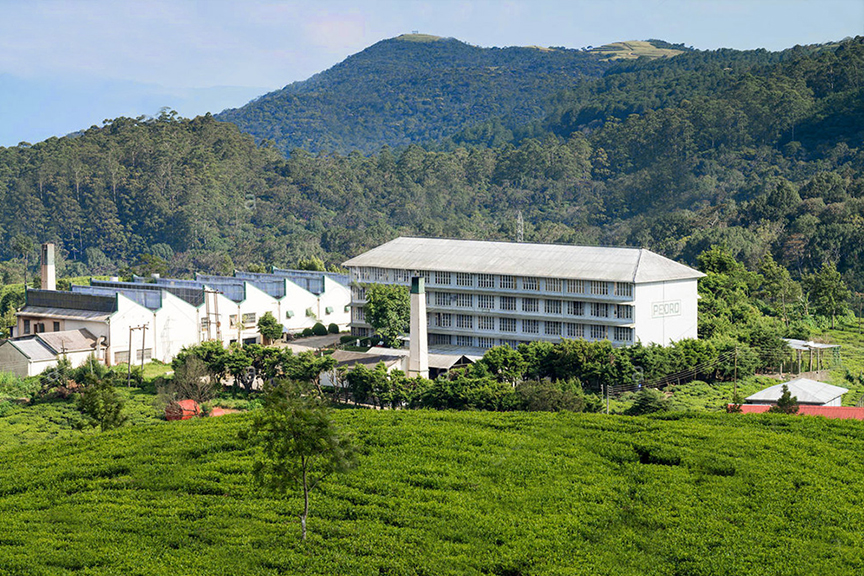
Pedro Tea Estate, established in 1885, sits at 1,800 metres above sea level just outside Nuwara Eliya.
The History: From Coffee Catastrophe to Tea Empire
Ceylon's tea story begins with a disaster. In the 1870s, a fungal disease called Hemileia vastatrix — coffee leaf rust — swept through the island's coffee plantations and destroyed them within a decade. The colonial planters faced ruin. It was a Scottish entrepreneur named James Taylor who had already established a small experimental tea plot on the Loolecondera Estate in Kandy who pointed the way forward.
Within twenty years, tea had replaced coffee across the hill country. By 1900, Ceylon was exporting over 70 million kilograms annually. By the early 20th century, 'Ceylon Tea' had become one of the most recognised brand identities in the world — a status it has never entirely relinquished.
Understanding Ceylon Tea: Altitude and Character
The finest Ceylon teas are categorised by altitude. High-grown teas (above 1,200 metres) — produced in Nuwara Eliya, Dimbula, and the Uva region — are light, bright, and with a floral, wine-like character. Mid-grown teas (600–1,200 metres) are fuller-bodied with a more rounded flavour. Low-grown teas (below 600 metres) are the most robust and full-flavoured, excellent for blending.
“Tea from Nuwara Eliya is like perfume in a cup. The altitude, the cool nights, the very specific terroir of this high plateau — you taste all of it. No two estates are the same.”
— Theekshana, Cultural Curator
The Estate Experience: What to Expect
A private estate tour takes you through the full journey from leaf to cup. You begin in the fields, where you learn to identify the 'two leaves and a bud' — the only part of the plant that is harvested — and try your hand at picking alongside the Tamil estate workers whose families have been doing this for generations. The work is extraordinarily skilled; an experienced picker can harvest up to 35 kilograms per day.
From the field, the tour moves to the factory floor: the withering lofts (where freshly picked leaves are spread on mesh racks and dried for 16 hours), the rolling machines, the fermentation rooms, and finally the firing ovens. The smell at each stage is extraordinary — grassy and vegetal in the withering rooms, intensely floral in the fermentation stage, toasty and complex in the firing room.
Expert Tip
The best estate tours are arranged privately rather than through the factory's public visitor programme. A private tour allows you to go further into the process, meet the factory manager, and conduct a proper tasting session with the estate's full range of teas. Ask your travel consultant to arrange this in advance.
- 1Key estates: Pedro, Mackwoods Labookellie, Dambatenne (Lipton), Halpewatte
- 2Best time to visit: January–March for the finest Nuwara Eliya 'season' teas
- 3Tour duration: 2–3 hours for a comprehensive private estate experience
- 4Nearest town: Nuwara Eliya (the hill country's principal town)
- 5Combine with: Horton Plains, World's End, Lipton's Seat viewpoint
Inspired by this story?
Let our experts craft a bespoke Sri Lanka experience tailored exclusively for you.
Enquire Now